Is a Cold Press the Optimal Machinery Investment for Your Woodworking Facility?
In commercial timber and panel processing, choosing between thermal and ambient pressing methods is a decision that directly influences your energy expenditure, glue-line integrity, and production throughput. While both hot and cold platen presses bond substrates, their operational footprints serve vastly different production goals.
For manufacturing directors evaluating capital assets, determining whether a cold press aligns with your operational workflow requires analysing resin mechanics, energy efficiency, and batch-curing cycles.
The Engineering and Economic Advantages of Cold Pressing
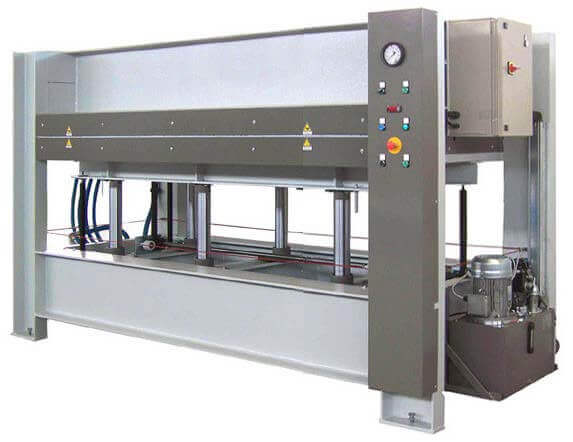
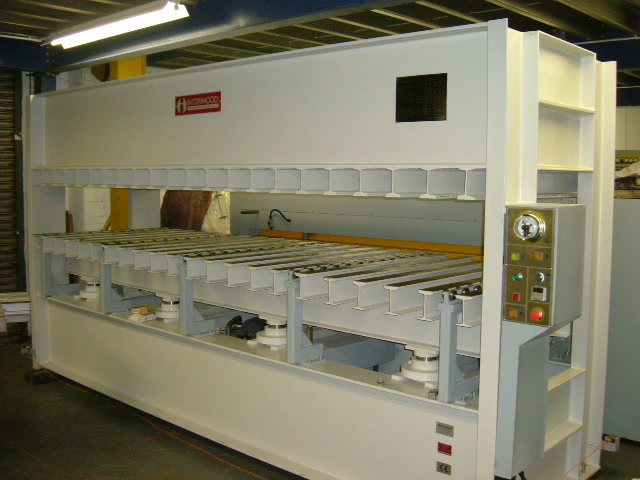
Cold hydraulic presses generate uniform mechanical force using ambient platens or heavy-duty roller matrices. Unlike heated platen systems that rely on thermal energy to accelerate resin curing, cold pressing relies entirely on precise, distributed tonnage and ambient-cure chemical formulations.
1. Superior Energy Efficiency and Lower Overhead
In an era of volatile industrial energy tariffs, cold presses offer a distinct financial advantage. Because ambient platens do not require thermal fluid circulation, steam, or high-kW electrical heating elements, electrical consumption is restricted solely to the operation of the hydraulic power pack. This significantly lowers facility utility costs per unit produced.
2. Enhanced Structural Integrity for Complex Substrates
For specific architectural joinery and high-specification timber components, ambient curing produces superior mechanical properties. Rapid thermal curing can induce internal stresses, surface checking, or moisture imbalance within sensitive timber species. Cold pressing allows adhesives to migrate naturally into the wood fibre, yielding a flexible, high-strength bond line that resists delamination under structural loads.
3. High-Volume Batch Stacking Capabilities
While an individual cold-press cycle requires a longer dwelling period than a hot press, this cycle time is offset by multi-panel batch processing. Facilities can load large, stacked daylights of MDF, plywood, or blockboard panels simultaneously. This makes cold presses exceptionally efficient for high-volume production of architectural doors, wall panelling, and laminated commercial furniture.
Overcoming Cycle-Time Constraints with Modern Resin Technology
Historically, the primary operational constraint of cold pressing was extended clamp duration. However, advancements in modern industrial adhesives, including rapid-setting PVA, polyurethane (PUR), and cross-linking emulsion formulations, have drastically reduced required dwell times under tonnage.
When paired with a modern Allwood hydraulic cold press, these chemical advancements enable facilities to achieve rapid bed turnover without incurring the high capital and running costs associated with heated platen infrastructure.
Technical Specifications & Operational Applications
High-tonnage hydraulic cold presses are engineered to process a wide range of core materials and surface finishes, including:
- Commercial Door Manufacturing: Applying architectural timber veneers, high-pressure laminates (HPL), and decorative foils to core substrates.
- Architectural Joinery: Lamination of thick solid-wood lippings, structural room dividers, and curved plywood forms.
- Composite & Panel Production: Uniform bonding across large-format particleboard, hardboard, and multi-layer sandwich panels.
Evaluating Your Capital Investment: Hot vs. Cold Pressing
Operational Factor > Industrial Cold Press > Industrial Hot Press
Primary Energy Requirement > Low (Hydraulic Power Pack Only) > High (Thermal Oil/Steam/Electric Platens)
Capital Expenditure (CapEx) > Lower Initial Investment > Higher Initial Investment
Ideal Application > Batch Stacking, Structural Doors, Sensitive Veneers > Rapid Single-Daylight Cycles, Fast Resin Curing
Substrate Stress > Minimal (Ambient Moisture Equilibrium) > Higher (Thermal Expansion/Contraction)
An industrial cold press should not be viewed as an ongoing operational cost, but as a long-term capital investment designed to deliver reliable performance over decades.
Bespoke Machinery Solutions by Allwood
Thanks to decades of engineering experience designing and manufacturing heavy-duty processing equipment, Allwood provides a comprehensive catalogue of cold and hot platen presses tailored to the exact requirements of the timber, plastics, and composite industries.
As the exclusive provider of modern Interwood Presses, we supply facilities globally with factory-floor solutions engineered to meet rigorous production targets. Whether your facility requires custom platen dimensions, specialized tonnage capabilities, or integrated bed automation, our engineering team can design a bespoke solution for your manufacturing line.
Explore Our Stock of Industrial Cold Presses
Contact Our Technical Engineering Team for an Asset Consultation